
Noom costs about $70 for a single month, but almost nobody pays that: the multi-month plans run $169 for 4 months, $179 for 6 months, and $209 for a full year, which works out to roughly $17 a month on the annual plan. There is usually a 7-day trial for as little as $0.50 before billing starts. Below is the full 2026 price breakdown, what you actually get for the money, and whether the app is worth it.
Noom is a subscription weight-loss app that pairs calorie and food tracking with a daily psychology-based course and human coaching. It launched in 2008 and has been downloaded tens of millions of times. The pitch is not another crash diet. It tries to change the habits behind your eating so the weight stays off, and that behavior-first angle is what separates it from a plain calorie counter. If you are new to this whole category, our guide to what mobile health apps actually do gives the wider picture.
Jump to paragraph
How much does Noom cost in 2026?

Noom prices its Weight program by commitment length. The longer you sign up for, the lower the monthly rate. These are the current 2026 plans from Noom’s own pricing page:
| Plan | Total price | Per month |
| Monthly (rolling) | ~$70 | ~$70 |
| 4 months | $169 | $42.25 |
| 6 months | $179 | $29.83 |
| 12 months | $209 | $17.42 |
Two things worth knowing before you tap subscribe. First, the price you see is personalized. When I ran through the onboarding quiz, the plan it put in front of me was a multi-month option, not the cheaper-looking rolling monthly. The number you land on depends on your answers, plus any promotion and tax.
Second, the trial is real but short. It runs about 7 days, sometimes at a token charge like $0.50, and it auto-renews into a paid plan unless you cancel. I set a calendar alert for day six so the renewal would not catch me out, and I would tell anyone to do the same. A lot of the complaints online come from people who forgot the trial ended and got billed for six months up front.
What about Noom Med and GLP-1 medication?
This is the big change since the app’s early years. Noom Med is a separate, more expensive track for people who want prescription weight-loss medication such as GLP-1 drugs, delivered through telehealth. It is not part of the standard Weight subscription and is priced on its own:
- Telehealth for branded medication: from $39 for a 30-day trial, then about $99 a month (the medication itself is extra).
- Microdose GLP-1 program: from $79 for the first 4-week supply, then around $199 a month.
- Full GLP-1 program: from $129 for the first 4-week supply, then roughly $279 a month.
If you only want the coaching-and-tracking app, ignore Noom Med entirely and stick with the Weight plans above. The medication track is a different product at a different price, and it involves prescriptions, so it should be a conversation with a clinician, not an impulse tap in an app.
What is Noom?
Noom is a mobile app that combines four things in one subscription:
- A daily psychology course. Short lessons on nutrition, stress, goal setting, and building habits that last.
- Tracking. You log meals, exercise, and body weight, and the app charts your progress.
- Coaching. A goal specialist plus group support you can message inside the app.
- Health logging. Optional entries for blood sugar and blood pressure.
The whole system runs on a phone. There is no in-person clinic and no scheduled video calls with a dietitian on the standard plan.
How does Noom work?
Noom works the same way every honest weight-loss method works: a calorie deficit. Eat a bit less than you burn over a long enough stretch and you lose weight. If you want the math behind that, see our breakdown of how many calories your body burns in a day.
At signup the app asks for your height, weight, age, goal, timeframe, and current activity level, then it runs those numbers into a daily calorie target. That saves you doing the calculation by hand. It is still an algorithm, though, so treat the number as a starting point rather than gospel.
Where Noom differs from a bare calorie counter is the questions about your relationship with food. Going through setup, I was surprised how much of the quiz was about beliefs around eating, alcohol, and stress rather than just my weight and goal, and that material feeds the daily lessons. The goal is that you understand why you eat the way you do, not just what to cut.
Daily logging of food and weight sits at the core, and self-monitoring has a long track record of helping people keep weight off. One caution: do not get welded to the scale number. Weight bounces day to day from water and salt. Aim for the trend over weeks, and check how you actually feel.
The food color system
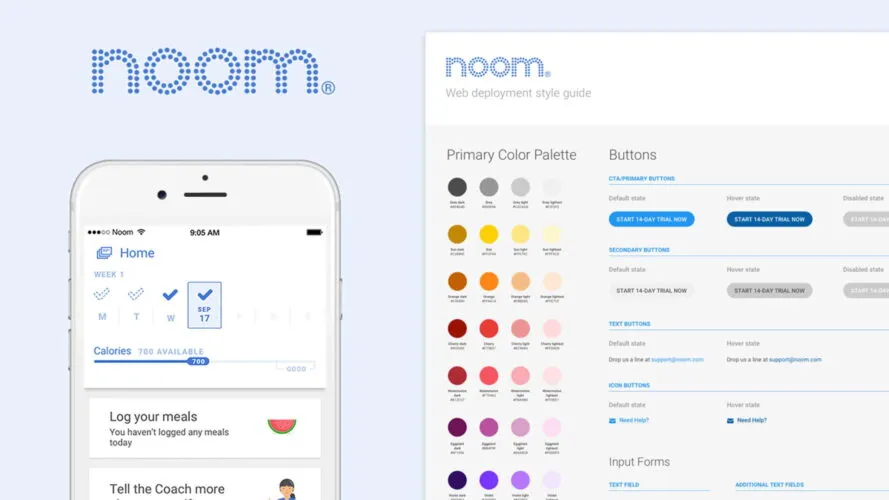
Noom sorts foods into green, yellow, and red by calorie density, which is how many calories a food packs for its weight. Green foods are lowest in calorie density and highest in water and fiber, so most fruits and vegetables land here. Red foods are calorie-dense but light on water and fiber: desserts, fried food, fatty meats, oils, and nuts. Yellow sits in the middle.
Nothing is banned. The point is to lean your plate toward green foods so you feel full on fewer calories, which makes the deficit easier to hold without white-knuckling through hunger. If you want ready-made structure, pairing the color system with a simple weight-loss meal plan tends to help people stick with it.
What are the downsides of Noom?

Noom is not for everyone, and it is worth being honest about where it falls short.
It can feed food anxiety. Logging every bite and watching foods get labeled red works for some people and backfires for others. If you have a history of disordered eating, constant tracking and color-coding can make things worse, not better.
It costs real money. Even the cheapest annual plan is $209 up front, and the month-to-month rate is around $70. There are free calorie-tracking apps and free content that cover a lot of the same ground. Noom’s argument is that paying makes you commit and the psychology course adds something free apps skip. Whether that is worth it depends on you.
Support is fully virtual. Coaching happens through in-app chat. There are no phone calls and no face-to-face appointments on the standard plan. Some people want a real person across a desk for something this personal, and Noom does not offer that.
Is Noom worth it?
Noom is worth it if you have tried plain calorie counting and it did not stick, and you think the daily lessons and habit coaching would keep you engaged. The behavior-change angle is genuinely the app’s strength. It is probably not worth it if you just want a free food log, if tracking every meal stresses you out, or if you were expecting in-person medical support. Start on the trial, decide within the week, and cancel before it renews if it is not clicking.
FAQs
How much does Noom cost per month?
Month to month, Noom runs about $70. On longer plans the monthly rate drops sharply: roughly $42 a month on the 4-month plan, about $30 on the 6-month plan, and around $17 a month on the 12-month plan ($209 total).
Is there a free version of Noom?
There is no permanent free version, but Noom offers a short trial, usually around 7 days and sometimes for as little as $0.50, before it bills you for a paid plan. It renews automatically, so cancel during the trial if you do not want to continue.
How much does Noom Med with GLP-1 medication cost?
Noom Med is separate from the Weight app. Telehealth for branded medication starts around $39 for a 30-day trial and then about $99 a month, with the medication billed separately. The microdose GLP-1 program runs from $79 then about $199 a month, and the full GLP-1 program from $129 then roughly $279 a month.
Can you cancel Noom and get a refund?
You can cancel anytime in the app. Refund rules vary by plan and country, and prepaid multi-month plans are the hardest to get money back on, which is why cancelling during the trial is the safest move if you are unsure.
Does Noom actually work?
For people who stick with the logging and lessons, yes, because it enforces a calorie deficit and the self-monitoring habit that research links to lasting weight loss. The app cannot make you consistent, though, and results fade if you stop using it.
Conclusion
Noom is a solid pick if the psychology and coaching are what you have been missing, and the annual plan at about $17 a month is reasonable for what it bundles. If you only need a calorie tracker, or if daily food logging stresses you out, cheaper or free tools will serve you better. Try the trial, watch the renewal date, and judge it on whether the daily lessons actually change how you eat.
This article is for general information only and is not medical advice. Talk to a doctor or registered dietitian before starting any weight-loss program or medication, including GLP-1 drugs.
Did you like article? Say thanks by clicking below: