
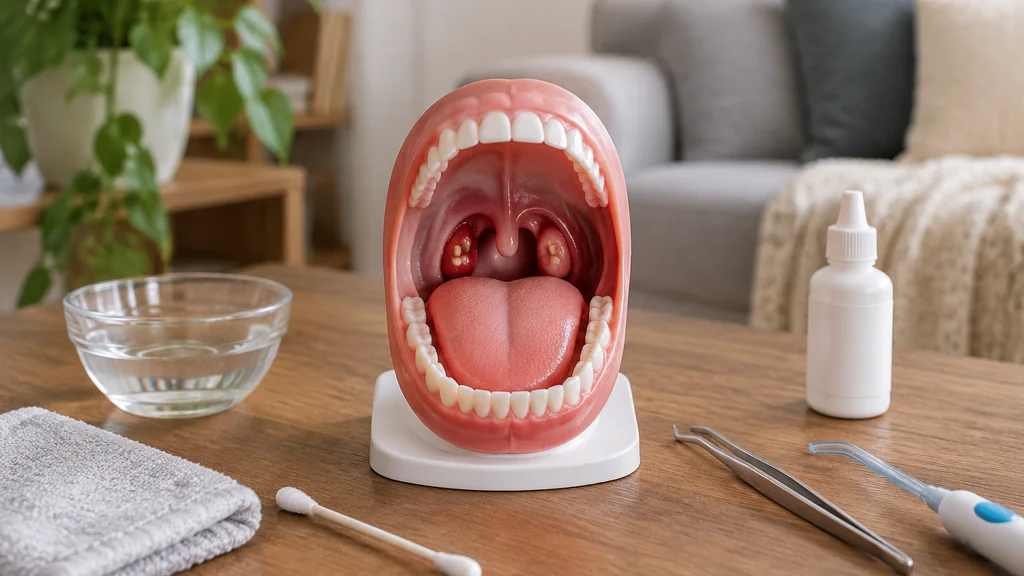
Most people manage them at home, but stubborn or recurring tonsil rocks sometimes need a doctor or dentist.
Jump to paragraph
What a Tonsillolith Actually Is
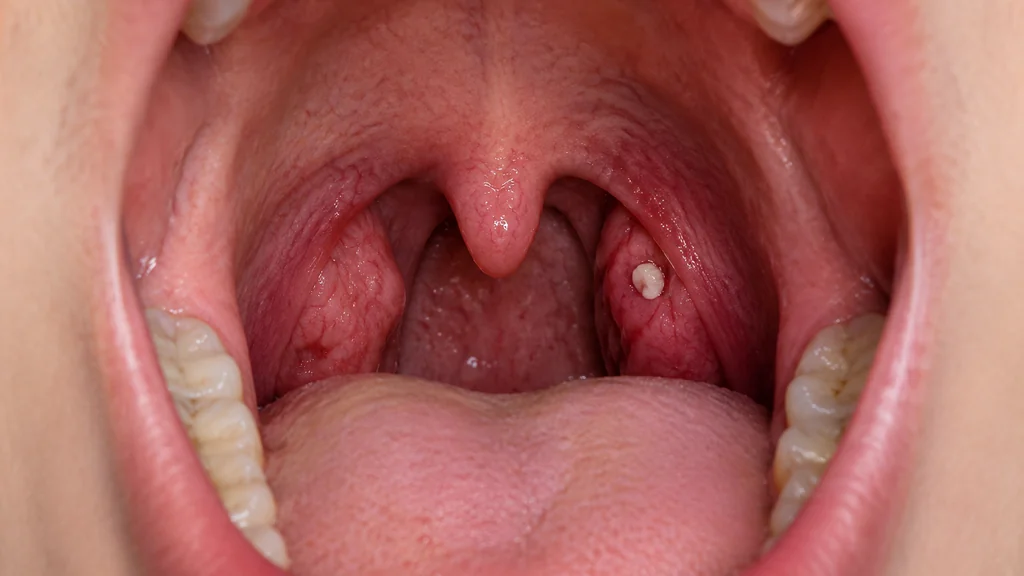
Your tonsils are not smooth balls. They are lumpy tissue full of little pits and folds called crypts. Debris may collect in these pits and folds. The exact makeup and texture of a tonsil stone can vary.
People describe the size in everyday terms, from a grain of rice to a pea, and the colour usually runs white, cream, or pale yellow. Some people notice an unpleasant smell.
A tonsil stone is a buildup in a tonsil crypt. Its appearance alone cannot establish whether another condition is present, so the removal methods below focus on the stone itself.
Why Tonsil Stones Form
Tonsil stones are associated with material collecting in the tonsil crypts. The following are possible contributors, though they do not establish why a particular stone formed.
- Deep or pitted tonsils. Crypts can vary in shape and depth, and debris may collect in them.
- Mucus and cells. These can be among the material found in a tonsil stone.
- Throat irritation. Sore throats, allergies, and post-nasal drip may be relevant for some people.
- Dry mouth. Saliva levels vary, and dry mouth may be relevant to debris in the mouth.
- Food and plaque. Food particles and plaque may be present in the mouth and tonsil crypts.
Age and past throat problems may be relevant, but they do not by themselves explain whether someone will develop tonsil stones. Tonsil crypts and their contents vary from person to person.
How to Remove Tonsil Stones at Home
If you notice a stone, avoid pressing or probing the tonsil. A clinician can advise you about removal options and whether an examination is appropriate.
- A warm salt water gargle is one approach people use when they notice a tonsil stone.
- If you look at the area, use a mirror and good light, and avoid touching the tonsil.
- Do not use a cotton swab or toothbrush to press on or beside the stone.
- If the area is painful or bleeding, avoid trying to remove the stone yourself.
- If you are unsure what you are seeing, ask a clinician for advice.
- Avoid repeated attempts to remove a stone, especially if it is difficult to reach.
Do not direct a water-flosser stream at the tonsil. Ask a clinician for advice about removal options if a stone is difficult to reach.
Avoid using a cotton swab or oral-care pick to probe the tonsil. If you are unsure how to handle a stone, ask a clinician for advice. A mirror may help you see the area without touching it.

What Helps Prevent Tonsil Stones
Once a stone is out, these habits are part of everyday oral care.
- Some people use salt water or a mild mouthwash as part of their oral care.
- Brushing and cleaning the tongue are parts of oral hygiene.
- Drinking water is one way to take in fluids during the day.
- Ask a clinician about allergies or post-nasal drip if these concern you.
- Sugary drinks and sticky foods are among the things you may choose to limit.
A dentist can discuss oral hygiene concerns, plaque, and gum problems. You can also ask a clinician about a tonsil stone if you have questions about it. If you use a fitness tracker or a health app to log symptoms like sore throats, that record can be genuinely useful at an appointment. It also helps to know how accurate those devices really are, which this breakdown of fitness tracker accuracy explains, so you can tell a real pattern from noise.
When to See a Doctor or Dentist
Whether to manage a stone at home or seek advice depends on the situation.
Ask a clinician about a stone that keeps coming back, is large or painful, or is difficult to reach. A clinician can examine the area and discuss whether further assessment or treatment is needed.
A clinician can discuss possible care options after examining the area. If stones are frequent or troublesome, ask about the options available, including whether tonsil removal is appropriate.
Removal Options Compared
Options can vary depending on the situation and should be discussed with a clinician if you are unsure what is suitable.
- Gargling. Some people use a gargle when they notice a stone.
- Cotton swabs. Avoid pressing or probing the tonsil with a swab.
- Water flosser. Do not direct a water-flosser stream at tonsil tissue.
- Professional advice. A clinician can discuss a stone that is difficult to reach.
- Tonsil removal. Ask a clinician whether this option is appropriate for your situation.

Costs vary by country and clinic, so check local prices before relying on a number you read online. For any rinse or product, check the label and ask a pharmacist if you are unsure.
If you are building healthier daily habits alongside this, a look at what mobile health apps are, their types, and their benefits can help you understand what these tools do. And if you are choosing a gym as part of a general health reset, this roundup of fitness clubs across the USA is a practical starting point.
Tonsil Stones FAQ
Are tonsil stones dangerous?
A tonsil stone is a lump of material in a tonsil crypt. Whether it needs attention depends on the situation. Ask a clinician about trouble swallowing, fever, one-sided swelling, or bleeding that will not stop, or if you are concerned about a stone.
Why do my tonsil stones smell so bad?
Some people associate tonsil stones with an unpleasant smell, but smell alone cannot establish its cause. If bad breath concerns you, a clinician or dentist can discuss possible explanations and oral care.
Can I just leave a tonsil stone alone?
Whether to leave a stone alone depends on the situation. Avoid digging at or pressing on the tonsil. Ask a clinician for advice if the stone is painful, difficult to reach, or causing concern.
Do tonsil stones mean I need my tonsils out?
A tonsil stone does not by itself establish that tonsil removal is needed. Ask a clinician about the options if stones are frequent or painful, or if you have repeated throat problems. The appropriate approach depends on your situation.
Can a water flosser remove tonsil stones?
Do not direct a water-flosser stream at the tonsil, as this may injure the tissue. Ask a clinician for advice about removal options if you have a stone. Avoid probing the tonsil with a cotton swab.
Did you like article? Say thanks by clicking below: