
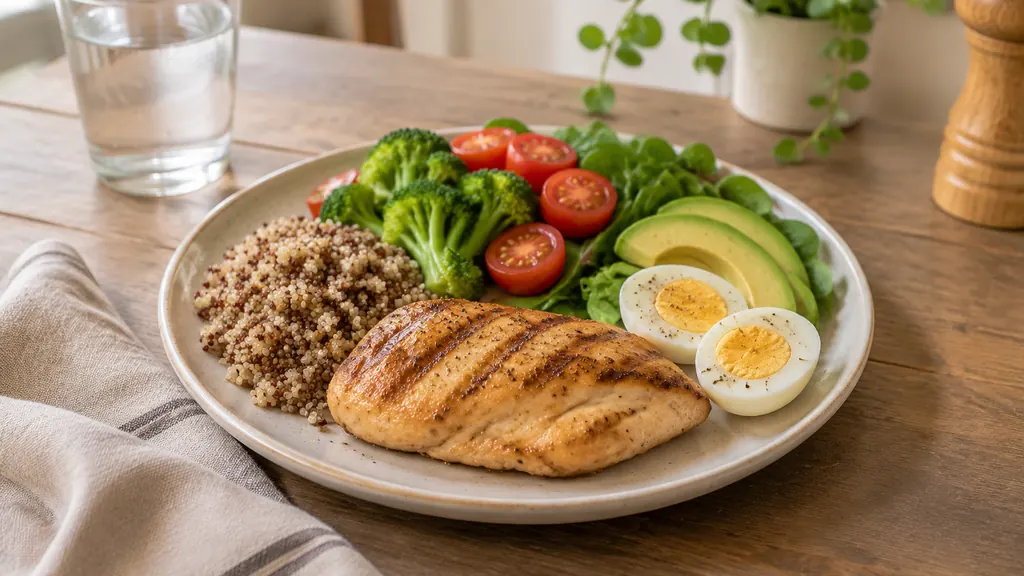
Most of the advice around protein is either a sales pitch or a diet plan. A balanced plate is simpler than that. You take a palm-sized portion of a high-protein food, add vegetables, add a starch or a whole grain, add a little fat, and repeat the pattern across the day so the total lands where your body needs it.
The National Academy of Medicine recommends adults get at least 0.8 grams of protein per kilogram of body weight daily. The acceptable range runs from 10% to 35% of daily calories. Whether you eat meat, fish, eggs, dairy, beans or all of them, the plate method works the same way.
Jump to paragraph
What Counts as a High-Protein Food
A practical working definition helps before you shop. One ounce (30 grams) of most protein-rich foods contains 7 grams of protein, per MedlinePlus, which makes comparison easy once you know what an ounce looks like on your counter. That covers a slice of cheese, a small stack of sliced turkey, a few forkfuls of flaked fish.
The foods that earn the label on a real plate:
- Poultry and meat — chicken breast, turkey, lean beef, pork loin. Use a consistent method when comparing portions.
- Fish and shellfish — salmon, tuna, cod, shrimp, sardines. Canned tuna and sardines are shelf-stable options that need no cooking.
- Eggs — whole eggs, plus egg whites if you want protein without extra fat.
- Dairy — Greek yogurt, cottage cheese, skyr, milk, hard cheeses.
- Legumes — lentils, chickpeas, black beans, split peas. They carry protein alongside fiber, which matters for the rest of the plate.
- Soy foods — tofu, tempeh, edamame, and firm tofu pressed and baked.
- Grains and seeds with a protein tail — quinoa, oats, hemp hearts, pumpkin seeds, peanuts.
Nuts and seeds are protein foods with a caveat. They can also contribute substantial fat and calories; check portions and labels. Use them as the fat on the plate and include another protein food as the anchor.
If you are building a plate for gut regularity as well, the legume list does double duty. Our guide to high-fiber foods for constipation relief explains how beans and lentils fit a fiber target without wrecking your week.
How Much High-Protein Food You Actually Need
The math is less intimidating than the marketing suggests. For healthy adults, the National Academy of Medicine sets a general minimum of 0.8 grams of protein per kilogram of body weight daily. Harvard’s nutrition source translates that into just over 7 grams for every 20 pounds of body weight. People with medical conditions may want to discuss protein needs with a clinician.
Two worked examples from the same source:
- A 140-pound person needs about 50 grams of protein each day.
- A 200-pound person needs about 70 grams of protein each day.
One gram of protein supplies 4 calories, per MedlinePlus. So 70 grams is roughly 280 calories from protein. The National Academy of Medicine sets the acceptable range at ten to thirty-five percent of daily calories.
Where people go wrong is spreading that total unevenly. Aim for a protein food at every meal, and let the daily total do the work while any single meal stays flexible.
The protein requirement is also a floor, and there is no default need to push past it. There are at least ten thousand different proteins in the human body doing structural and signalling work, and they all get built from the amino acids you eat.
Building the Plate: A Step-by-Step Method
Use this sequence when a plate looks empty and the fridge looks full. It works for a weekday dinner, a packed lunch, and a weekend breakfast.
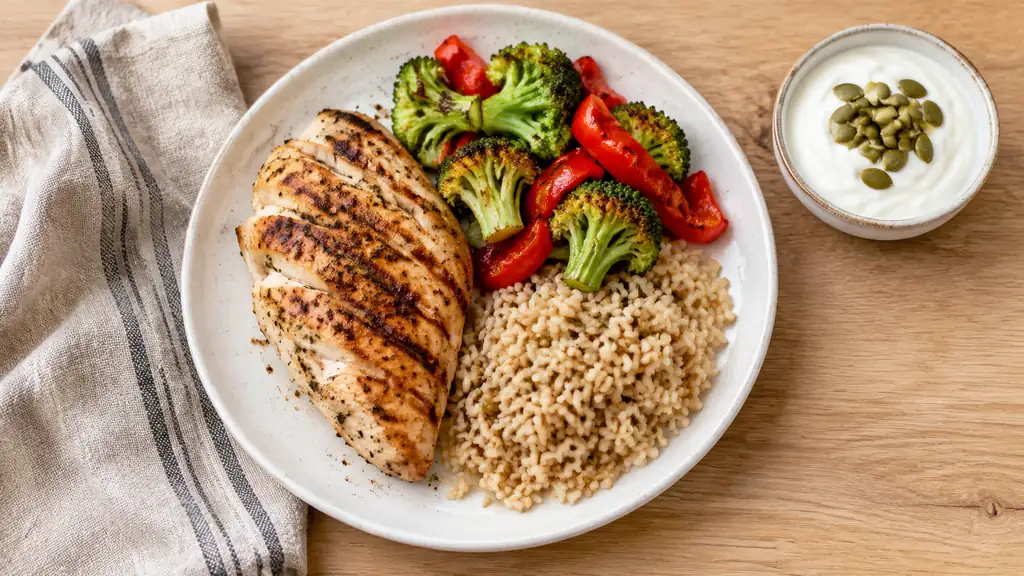
- Put the protein down first. Palm-sized portion of chicken, fish, tofu, or a double handful of legumes. This anchors the plate before anything else competes for space.
- Add vegetables. Fresh, frozen, roasted, or raw. Frozen broccoli and spinach can be convenient and keep longer.
- Add one starch or whole grain. Rice, potatoes, tortillas, oats, or bread. Use a portion that fits your appetite and needs; people training hard may want individualized guidance.
- Add a thumb of fat. Olive oil, butter, avocado, tahini, or a scatter of seeds. This is where nuts and cheese usually land.
- Season properly. Salt, acid, heat, herbs. Under-seasoned food may be less appealing and more likely to go uneaten.
- Check the color. Mixing several different vegetables across the week is an easy way to keep the plate varied.
- Repeat at the next meal with a different protein. Rotating between poultry, fish, eggs, dairy, and legumes spreads the nutrients and keeps the week from getting boring.
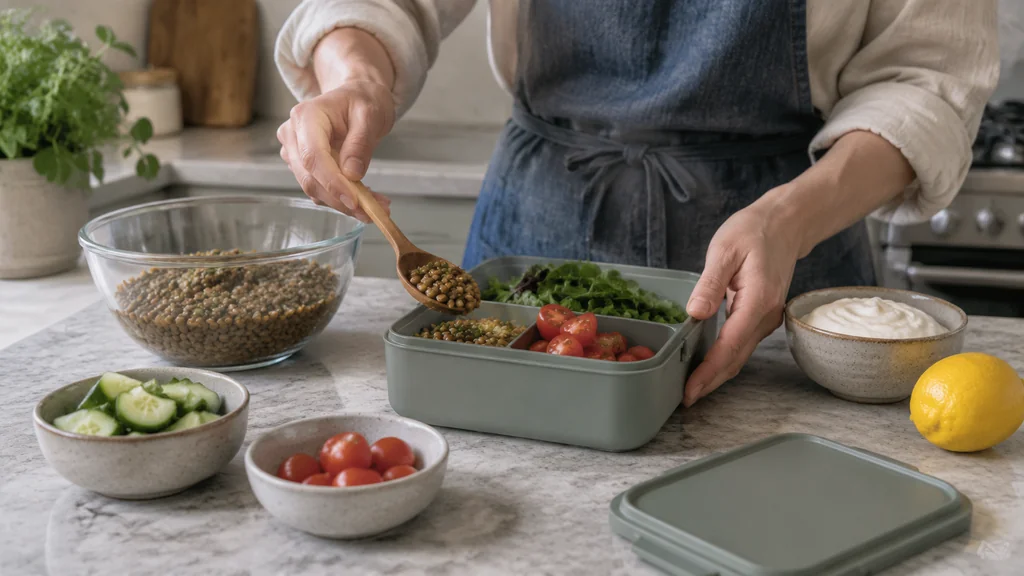
The method scales down to a lunchbox and up to a family tray bake. For a packed lunch, a jar with lentils, chopped vegetables, and a dressing travels better than a sandwich and holds up in a work fridge.
Cheap High-Protein Food That Earns Its Place
Options that tend to work in a protein-focused budget:
- Dried lentils and split peas — cook in a pot without soaking, and freeze well.
- Canned beans and chickpeas — ready in minutes and easy to keep on the shelf.
- Canned tuna and sardines — shelf-stable, no cooking, and useful for days when the fridge is bare.
- Chicken thighs — usually cheaper than breast and harder to overcook.
- Plain Greek yogurt and cottage cheese — buy the large tub, not the single-serve cups.
- Tofu — the firm type holds up in a pan and stretches across several meals.
Buy plain, season yourself, portion into containers.
If you are comparing fiber products for the same budget reasons, the comparison of fiber supplement types covers what each form actually delivers.
Plant and Animal Protein on the Same Plate
Both belong on a balanced plate, and the plate method lays out the trade-offs in plain view.
Legumes, soy foods, whole grains, and seeds all carry protein, and dried legumes store for months.
A meta-analysis of red meat substitution pooled data from 36 randomized controlled trials involving 1,803 participants and examined what happens when red meat is swapped for other protein sources.
There is an environmental angle too. In the U.S., beef accounts for 36% of all food-related greenhouse gas emissions, per Harvard’s nutrition source. You do not have to give up beef to act on that. Swapping some beef dinners for other protein foods is one possible dietary change.
Nutrition databases have limits you should know about if you track closely. The USDA Global Branded Food Products Database stopped receiving new food component information from Label Insight after November 16, 2023, so some packaged-food entries are stale. The Food Patterns Equivalents Database covers 2021-2023. Check the label on the package in front of you, because an app entry may not have been updated.

Mistakes That Flatten a Good Plate
- Protein only at dinner. The daily total is what counts. Spread it across meals.
- Forgetting the vegetables. A plate of chicken and rice is a protein delivery system, not a balanced plate. Include a generous portion of vegetables.
- Trusting the front of the package. High-protein claims on boxes are marketing.
There is a kitchen-safety side to this too. Follow your local food-safety guidance for refrigeration and storage times, because rules differ by country and by product.
When to Get Help From a Professional
The plate method is general advice. Some situations need a dietitian or a doctor in the room.
- Unintended weight loss or a poor appetite. A clinician can assess whether the cause is medical and whether supplements are appropriate.
If you are managing an injury alongside your training and nutrition, recovery basics follow the same principle of doing the boring things consistently. Our overview of ulnar collateral ligament injuries and recovery covers the anatomy and the rehab side for anyone building a plan around a return to sport.
High-Protein Food FAQ
How much protein should be on my plate at each meal?
As an optional planning example, a person targeting 70 grams across the day might put roughly 15 to 20 grams on each main meal. One ounce of most protein-rich foods contains 7 grams, per MedlinePlus, which makes the estimate quick.
Is a high-protein diet safe for healthy adults?
The National Academy of Medicine gives an acceptable range of ten to thirty-five percent of daily calories for healthy adults, but safety depends on the person and the overall diet. The minimum recommendation is at least eight-tenths of a gram per kilogram of body weight daily, per the same body. People with kidney disease or other medical conditions should get individual advice suited to their situation.
A 140-pound person needs about 50 grams of protein each day, per Harvard’s nutrition source, and that is reachable with lentils, tofu, Greek yogurt, and eggs across three meals.
Are protein shakes necessary?
No. Whole foods deliver protein alongside other nutrients, and the exact profile varies by product, so compare labels. Some people use a shake when appetite is low, while travelling, or after training. Treat it as a tool alongside the plate.
How do I know if a packaged food is really high in protein?
Read the nutrition panel on the back and compare the grams of protein against the calories and the serving size, alongside the claim on the front. One gram of protein supplies 4 calories, per MedlinePlus, so a product claiming high protein with a tiny gram number is mostly marketing. Check the label and compare it against the plain ingredient it is replacing.
Did you like article? Say thanks by clicking below: