
Informational only. This article explains how wearable technology works and is not medical advice. Wearable readings are estimates, not clinical measurements—talk to a qualified healthcare professional about any health concern or before acting on data from a device.
Your smartwatch tells you that you slept 6 hours and 42 minutes, your resting heart rate is 58, and your blood oxygen is 97%. But where do those numbers actually come from? Understanding how wearables track your health helps you trust the readings that matter, ignore the ones that don’t, and shop for a device that fits how you actually live.
This guide breaks down the sensors inside modern fitness trackers and smartwatches, what each metric really measures, how accurate it tends to be, and how to get cleaner data from whatever you already own.
Jump to paragraph
How do wearables track your health?
Wearables track your health by combining small optical, electrical, and motion sensors with software that turns raw signals into metrics like heart rate, steps, sleep, and blood oxygen. No single sensor “knows” your heart rate or sleep stage—the device estimates each metric by reading a physical signal at the wrist and running it through algorithms that filter out noise from movement and skin contact.
That word—estimate—matters. A wearable is a consumer device, not a medical instrument. It is very good at spotting trends and changes over time, and far less precise for any single instantaneous reading.
The main sensors inside a fitness tracker
Most modern trackers and smartwatches rely on a handful of core sensors. Here is what each one does.
Optical heart-rate sensor (PPG)
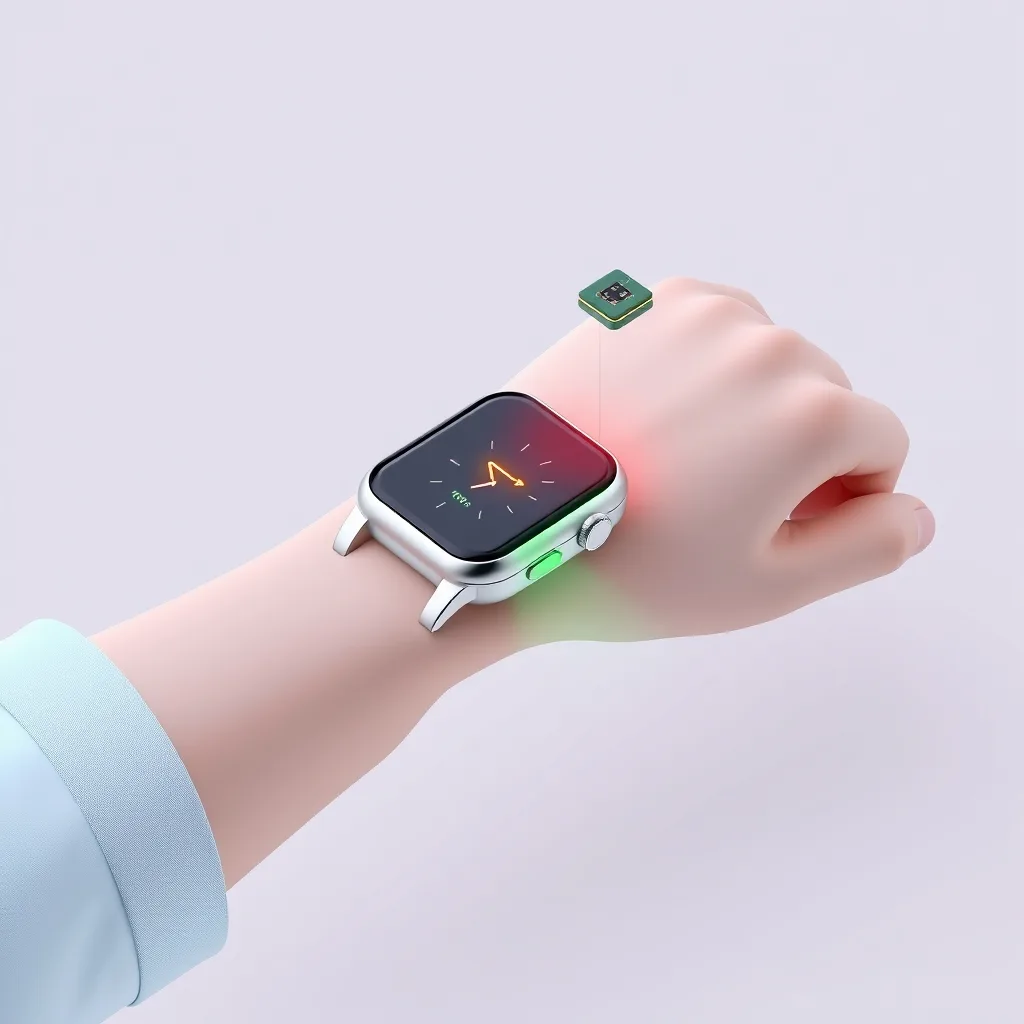
The green lights you see glowing on the underside of a watch are an optical heart-rate sensor, a technique called photoplethysmography, or PPG. The device shines light into your skin and measures how much bounces back. Because blood absorbs light, the reflected signal rises and falls with each pulse of blood through the capillaries in your wrist. Counting those pulses gives beats per minute.
PPG is the workhorse behind resting heart rate, continuous heart-rate tracking, and most “stress” or recovery scores. It works well at rest but struggles during vigorous, jerky movement—think burpees or weightlifting—when motion shakes the signal.
Accelerometer and gyroscope
A tiny accelerometer detects movement and orientation; a gyroscope tracks rotation. Together they power your step count, distance estimates, automatic workout detection, and a large part of sleep tracking. When the device sees almost no movement for a sustained period, it infers you are asleep.
SpO2 (blood-oxygen) sensor
Many newer watches add red and infrared light to the optical array to estimate blood-oxygen saturation, or SpO2. Like PPG, it reads how light passes through blood. Consumer SpO2 features are designed for general wellness trends, not clinical diagnosis, and readings can swing with fit, skin tone, and cold hands.
Electrical sensors (ECG and EDA)
Higher-end smartwatches include electrical sensors. An ECG (electrocardiogram) feature uses electrodes—usually you touch the crown or frame with a finger to complete a circuit—to record the heart’s electrical activity and check the rhythm. Some devices also include EDA (electrodermal activity) sensors that measure tiny changes in skin conductance linked to the body’s stress response.
Skin temperature sensor
A skin-temperature sensor tracks small overnight shifts from your personal baseline. It is not a thermometer for taking your temperature; it is used to flag relative changes that may relate to sleep, recovery, or cycle tracking.
What each health metric actually measures
Knowing the sensor is half the picture. Here is how the headline numbers are built and how much to trust them.
- Steps and distance: Counted by the accelerometer recognizing the rhythmic pattern of walking. Reliable for general activity trends; distance is an estimate unless GPS is used.
- Heart rate: From the PPG sensor. Generally accurate at rest and during steady cardio; least reliable during high-intensity interval training and weight work.
- Sleep stages: Inferred from movement plus heart-rate patterns. Total sleep time tends to be reasonably close; the breakdown into light, deep, and REM stages is an educated estimate, not a lab sleep study.
- Calories burned: A model based on your heart rate, movement, age, weight, and sex. Treat it as a rough relative figure, useful for comparing days, not as a precise budget.
- Blood oxygen (SpO2): An optical estimate for wellness trends. Sensitive to fit and conditions.
- Stress and recovery scores: Derived mostly from heart-rate variability (HRV)—the tiny timing differences between beats. Best read as a trend over weeks, not a verdict on a single morning.
How accurate are wearables, really?
Wearables are most trustworthy for trends, not absolute single readings. Independent research has generally found consumer wrist devices to be good at estimating heart rate and steps under steady conditions, while calorie and sleep-stage estimates are far more variable. The U.S. Food and Drug Administration distinguishes between general-wellness features and cleared medical functions—some ECG and irregular-rhythm notification features have received FDA clearance, while step, sleep, and calorie tracking are wellness features, not diagnostic tools. [Verify specific FDA clearance status for any device before relying on a medical claim.]
The practical takeaway: use the numbers to compare you today against you last month. A resting heart rate creeping up over two weeks, or sleep getting consistently shorter, is a meaningful signal worth noticing—and worth raising with a clinician.
How to get more accurate readings from your wearable
Most accuracy complaints come down to fit and habits, not the hardware. A few simple fixes:
- Wear it snug and in the right spot. The band should sit about a finger-width above the wrist bone, snug enough that the sensor stays in contact but not painfully tight. A loose watch lets light leak in and wrecks heart-rate and SpO2 readings.
- Keep skin and sensor clean and dry. Sweat, lotion, and grime scatter the optical signal.
- Use GPS for outdoor distance. Wrist-only distance is estimated; GPS pins it down.
- Enter your profile accurately. Age, height, weight, and sex feed the calorie and effort models.
- Give it consistent conditions. Cold hands, a tattoo under the sensor, or very dark or very pale skin can all affect optical readings to different degrees.
- Update the software. Manufacturers frequently improve their algorithms—the same hardware can read more accurately after an update.
Choosing a wearable for the health data you care about
Match the device to your goal rather than chasing the longest spec sheet. If your priority is everyday activity and sleep, a basic fitness tracker with PPG and an accelerometer covers it. If you want heart-rhythm features, look specifically for ECG and irregular-rhythm notifications. For training, prioritize built-in GPS and reliable heart-rate tracking. And remember that a device is only useful if you actually wear it—comfort and battery life often matter more than one extra sensor.
Whatever you pick, pairing it with the right software helps. Our roundup of health apps experts recommend shows how the right app turns raw sensor data into something you can act on, and you can even support your mental health with your phone using the same data you are already collecting.
Frequently asked questions
How do smartwatches measure heart rate without touching a vein?
They use an optical sensor (PPG) that shines light into the skin and measures how the reflection changes as blood pulses through the capillaries near the surface of your wrist. The device counts those pulses to calculate beats per minute—no needles or veins involved.
Are fitness tracker sleep stages accurate?
Total sleep time is usually reasonably close, but the breakdown into light, deep, and REM sleep is an estimate based on movement and heart-rate patterns, not a clinical sleep study. Use it to spot trends in how long and how restlessly you sleep rather than as a precise stage-by-stage record.
Can a wearable diagnose a medical condition?
No. Most wearable features are general-wellness tools, not diagnostic instruments. A few functions, such as certain ECG and irregular-rhythm notifications, have specific regulatory clearance, but even those are meant to prompt a conversation with a clinician—not to replace one. Always consult a qualified healthcare professional about any health concern.
Why is my heart rate wrong during workouts?
Optical sensors struggle when your wrist moves sharply, as in weightlifting or high-intensity intervals, because motion adds noise to the light signal. Wearing the band snugly and slightly higher on the wrist helps; for serious training, a chest-strap heart-rate monitor is more accurate.
Does skin tone affect wearable accuracy?
It can. Optical sensors rely on light passing through skin, so factors including skin tone, tattoos, cold hands, and band fit can all influence readings to varying degrees. Manufacturers continue to refine algorithms to reduce these gaps, and a good fit makes the biggest practical difference.
The bottom line
Wearables track your health by reading light, motion, electrical, and temperature signals at your wrist and translating them into familiar numbers. They shine at revealing trends over time and are far less precise for any single instantaneous reading. Wear your device correctly, watch the direction your numbers move rather than obsessing over one figure, and treat every metric as a helpful prompt—not a diagnosis. For anything that worries you, the data is a starting point for a conversation with a healthcare professional, not a substitute for one.
This article is for general educational purposes only and does not constitute medical advice.
Did you like article? Say thanks by clicking below: