
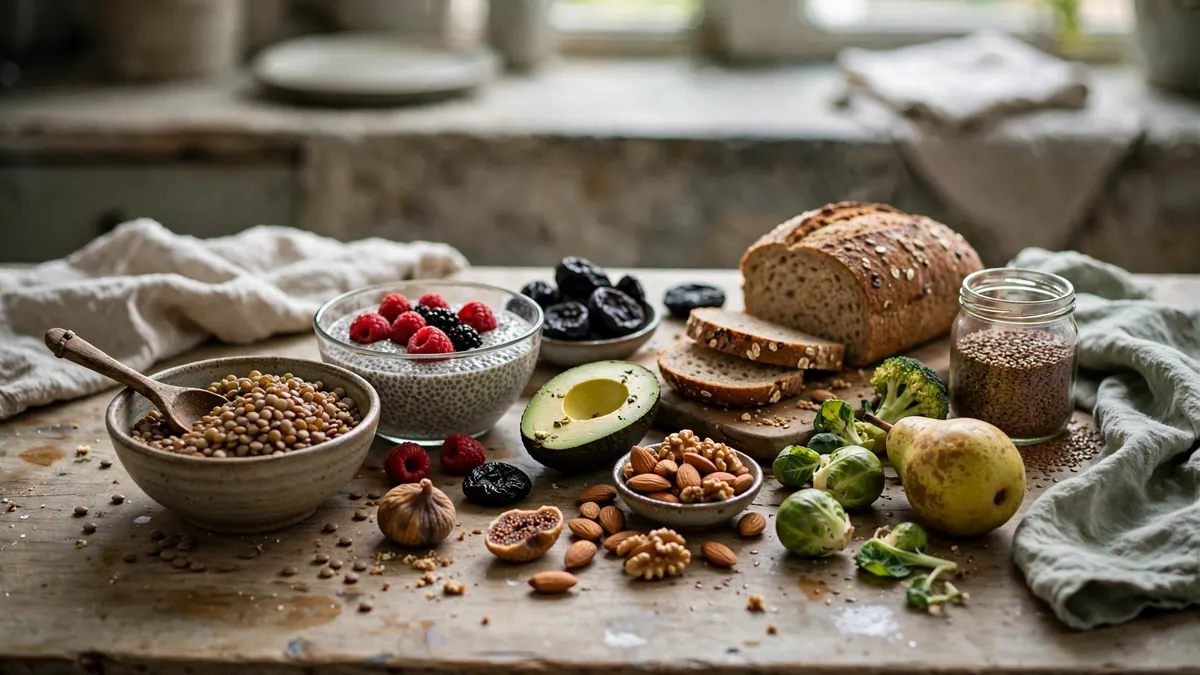
Constipation usually eases when you eat more fiber from whole foods and drink enough water alongside it. Most adults do well aiming for roughly 25 to 35 grams of fiber a day; many consume less than recommended. The fix is not one magic food. It is a steady mix of soluble and insoluble fiber, added slowly over a week or two so your gut adjusts.
Jump to paragraph
What Fiber Actually Does in Your Gut
Fiber is the part of plant food your body cannot digest. It travels to the colon, where it does two jobs.
Soluble fiber dissolves in water and forms a gel. That gel softens hard stool and slows digestion, which helps if your stool is dry and pebbly. Oats, barley, and psyllium are classic soluble sources.
Insoluble fiber does not dissolve. It adds bulk and speeds transit through the bowel, which helps if you feel like you never fully empty. Wheat bran, vegetable skins, and whole grains carry this type.
Most plant foods hold both kinds. You do not need to sort them. You need variety.
One caution. Fiber only works with fluid. Add fiber without water and stool can become harder. Drink water through the day, and more in hot months like July and August.
The Best High-Fiber Foods to Put on Your Plate
These are the foods worth building meals around. Amounts vary by variety and ripeness, so check the label or a food database for exact grams.
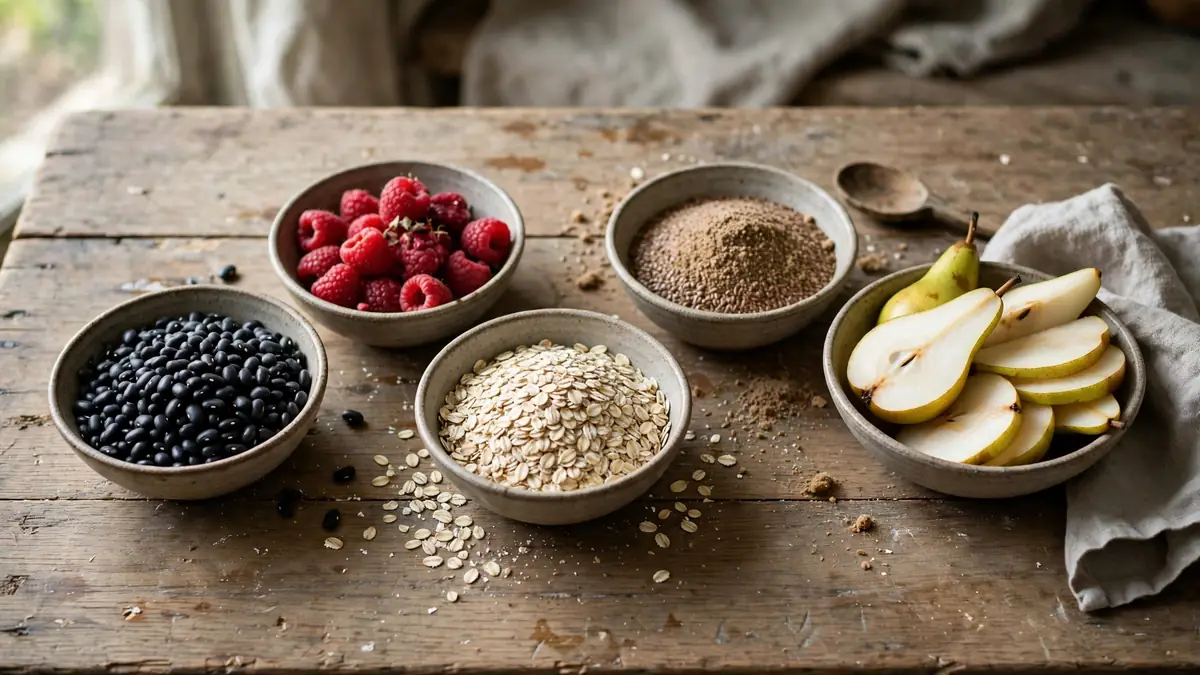
- Beans and lentils. Black beans, kidney beans, chickpeas, and lentils are among the richest sources. A half cup cooked delivers a serious fiber hit.
- Berries. Raspberries and blackberries lead the group. Fresh or frozen both work.
- Pears and apples. Eat the skin. Most of the fiber sits there.
- Prunes and dried figs. Prunes also contain sorbitol, a natural sugar alcohol that draws water into the bowel.
- Oats and barley. A bowl of oatmeal in the morning is one of the easiest additions.
- Whole grains. Quinoa, buckwheat, and whole wheat pasta beat refined versions.
- Leafy greens and broccoli. Spinach, kale, and Brussels sprouts add bulk with few calories.
- Nuts and seeds. Almonds, chia, and flaxseed. Ground flaxseed mixes into yogurt or cereal.
- Avocado. Creamy, easy to eat, and fiber-rich.
- Sweet potato. Roasted with the skin on, it is a simple dinner side.
A Simple 5-Step Plan to Add Fiber Without Bloating
Jumping from low fiber to high fiber in a day causes gas, cramps, and more constipation. Follow this order instead.
- Track what you eat for three days so you know your starting point.
- Add one fiber-rich food at a time, and keep each new one for several days before adding the next.
- Increase your water intake at the same time, since fiber needs fluid to soften stool.
- Move your body daily. A walk after meals helps the bowel.
- Build a routine. Same breakfast, same bathroom window each morning, so your gut learns the pattern.
Give it two to three weeks. The gut microbiome shifts slowly, and early gas usually settles.
Sample Day of Good Fiber Foods for Constipation
A full day of good fiber foods for constipation does not need to be complicated.
Breakfast: Oatmeal with ground flaxseed and raspberries. Lunch: Lentil soup with a side of kale. Snack: A pear and a small handful of almonds. Dinner: Black bean chili with brown rice and roasted sweet potato. Evening: A few prunes with a glass of water.
That day lands well inside a high fiber diet for constipation, and nothing on the list is exotic. If you eat out often, the same logic applies. Choose the bean burrito over the plain one, the whole grain bread over white, and a fruit cup over chips.
Fiber Supplements: When Food Is Not Enough
Sometimes food alone falls short, especially during travel or illness. Supplements can fill the gap.
Psyllium husk is the most studied bulk-forming fiber. Methylcellulose and calcium polycarbophil are other options. Wheat dextrin is a gentler choice for some people.
Start with a small dose and work up. Take supplements with a full glass of water. Never take a fiber supplement right before bed, because you will not drink enough fluid while you sleep.
If you take medication, check with a pharmacist first. Fiber can slow the absorption of some drugs, so timing matters.
Mistakes That Keep You Constipated
Even a high fiber diet for constipation fails when these slip.
- Adding fiber too fast. Gas and bloating send people back to old habits.
- Skipping water. Dry fiber is a plug, not a fix.
- Ignoring the bathroom urge. Holding it trains the bowel to wait.
- Relying on one food. A daily apple is good, but variety feeds more gut bacteria.
- Cutting fat to zero. Some fat in the diet helps the bowel move.
- Expecting overnight results. Fiber works over days and weeks.
If you also track steps or workouts, remember that general activity helps motility. Consumer wearables vary, and you can read how accurate fitness trackers really are before trusting every number they show. Studies of fitness tracker accuracy also examine how closely the devices measure activity.
When to See a Doctor Instead of Changing Your Diet
Fiber handles ordinary constipation well. Some signs need a clinician.
See a doctor if you notice blood in the stool, unexplained weight loss, severe pain, or constipation that lasts several weeks despite a high fiber diet. Talk with a healthcare professional if constipation starts suddenly, persists, or alternates with diarrhea.
Long-term constipation can also signal thyroid problems, medication side effects, or a bowel obstruction. Those are not diet issues, and no amount of prunes will fix them. Your local rules on screening vary, so ask your clinician what applies to you.

Building the Habit for the Long Run
Fiber works best as a lasting part of your routine. Keep beans in the pantry, frozen berries in the freezer, and oats in the cupboard. Those three alone cover a lot of ground on a busy Tuesday.
Pair the diet with movement. If you are choosing where to exercise, a look at the best fitness clubs and gyms in the USA can help you find a place you will actually visit. If your job keeps you at a desk, the same remote care thinking that drives bridging the gap in remote ICU solutions shows how care and monitoring increasingly happen outside a single building, and your own routine can be just as flexible.
Small, steady changes beat dramatic ones. Add one food this week. Drink one more glass of water. Walk after dinner. Your gut will follow.

High-Fiber Foods for Constipation FAQ
How much fiber do I need daily for constipation relief?
Most adults do well aiming for roughly 25 to 35 grams of fiber a day. Check the label on packaged foods to see how much you are getting. If you are far below that, increase your fiber intake gradually.
Which foods relieve constipation fastest?
Prunes, kiwifruit, and warm oatmeal tend to work quickly for many people. Prunes contain sorbitol, which pulls water into the bowel. Kiwifruit has both fiber and an enzyme that supports motility.
Can too much fiber make constipation worse?
Yes. Fiber without enough fluid can harden stool and add gas. Increase water at the same time, and raise your fiber intake over one to two weeks. If symptoms worsen, ease back and speak with a clinician.
Is soluble or insoluble fiber better for constipation?
Both help, and they work differently. Soluble fiber, found in oats and psyllium, softens stool. Insoluble fiber, found in wheat bran and vegetable skins, adds bulk. Most people do best with a mix of the two.
Are fiber gummies as good as food sources?
They can help, but they usually carry less fiber per serving than beans, berries, or whole grains. Food also brings vitamins, minerals, and water along with the fiber. Use supplements to fill gaps in your diet.
Did you like article? Say thanks by clicking below: