
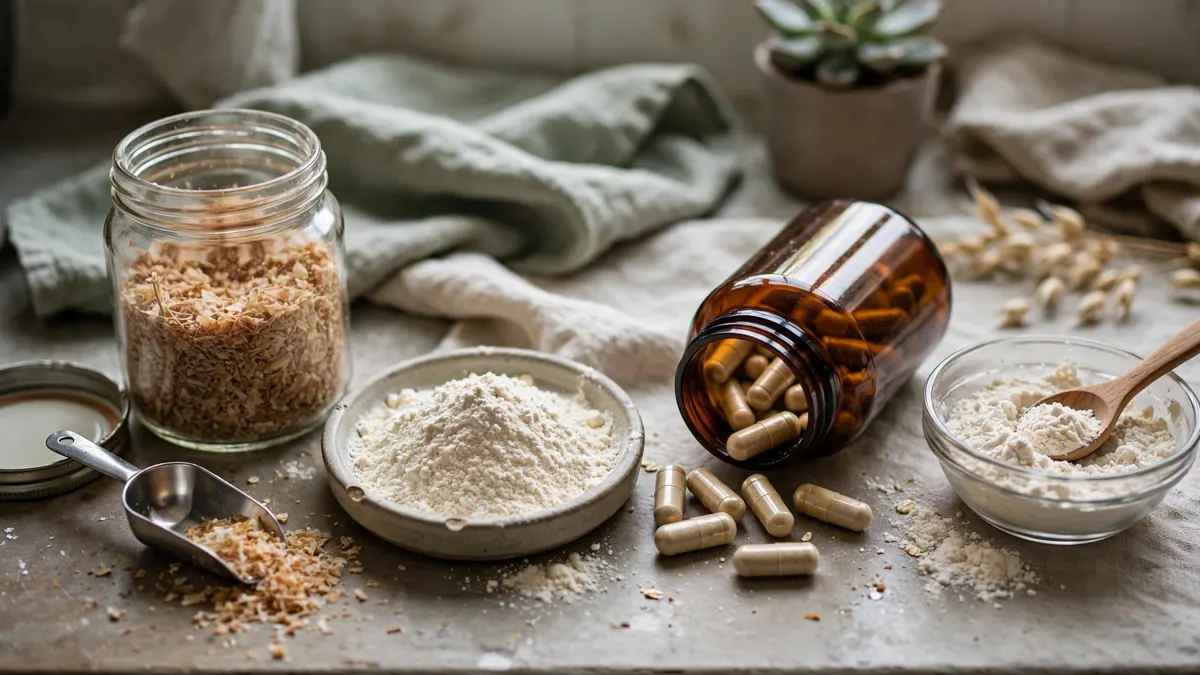
Fiber supplements for regularity work by adding bulk or drawing water into the stool, and the type you choose decides how your gut responds. Soluble fibers such as psyllium form a gel that softens hard stool. Most adults do well starting with a single soluble fiber and adjusting the dose slowly over one to two weeks.
Jump to paragraph
Soluble vs Insoluble: What Each Type Does
Soluble fiber dissolves in water and turns into a gel inside the gut. That gel holds moisture, which softens stool and makes it easier to pass. Psyllium husk is the classic example, and it is the form most often studied for chronic constipation. Inulin and other prebiotic fibers ferment in the colon and feed gut bacteria, which can help some people and cause gas in others.
Insoluble fiber does not dissolve. It adds physical bulk and helps the colon move contents along. Wheat bran and cellulose fall into this group. If your stool is already soft but infrequent, bulk may be the missing piece. If your stool is hard and dry, a gel-forming soluble fiber usually helps more.
Many products blend both. That is fine, but it makes it harder to tell which ingredient is doing the work when something goes wrong. Start simple.
The Main Types Compared
Psyllium husk. A soluble, gel-forming fiber from the Plantago ovata plant. It is the most common recommendation for constipation because it holds water well and is gentle for most people. It needs a full glass of water with every dose.
Methylcellulose. A synthetic soluble fiber that forms a softer gel than psyllium. It ferments less, so it causes less gas for some people. It is a reasonable option if psyllium feels too bulky.
Wheat dextrin. A soluble fiber from wheat that dissolves clear and mixes easily into drinks. It adds bulk without much gel. People with celiac disease or gluten sensitivity should check the label carefully.
Inulin and chicory root. Prebiotic soluble fibers that ferment heavily. They support gut bacteria but are a common cause of bloating and gas in the first weeks.
Polydextrose. A synthetic soluble fiber used in fortified foods and powders. It is well tolerated at low doses and adds bulk.
Wheat bran and cellulose. Insoluble fibers that add bulk and speed transit. They work best when you drink enough water, since dry bulk can make constipation worse.
How to Start a Fiber Supplement
- Pick one product with a single fiber type and read the label for the serving size.
- Take it once daily at the same time, with a full glass of water.
- Stay at that dose for several days before changing anything.
- Increase slowly, one step at a time, only if stool is still hard or infrequent.
- Drink water throughout the day, not just with the dose.
- Give it one to two weeks before judging the result.
- Stop and talk to a clinician if you get severe pain, vomiting, or no bowel movement.
Water, Timing, and Dose Matter More Than the Brand
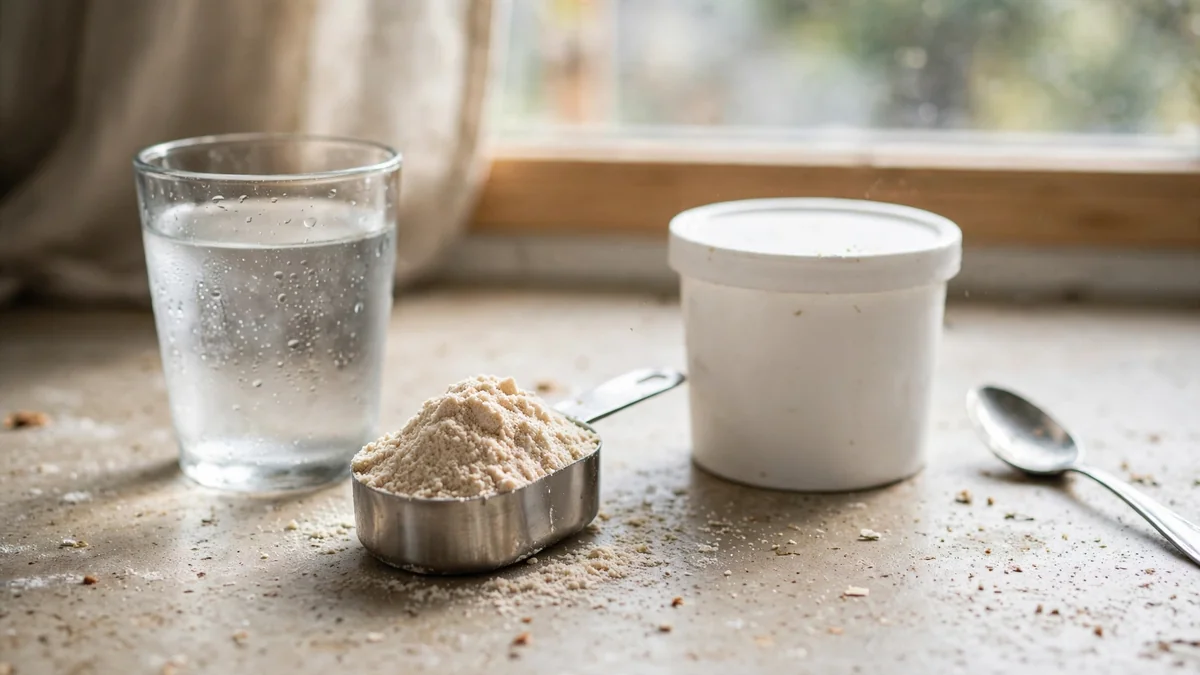
Fiber without water is the most common mistake. A gel-forming fiber pulls fluid from your gut, so if you are dehydrated, it can firm things up instead of softening them. Aim to drink water regularly across the day, including at dose time.
Timing is flexible. Some people take fiber with breakfast, others at night. What matters is consistency. A missed day here and there is fine, but irregular dosing makes it hard to know whether the product is helping.
Dose is where most people go wrong in the other direction. Starting at a full dose on day one is a fast route to bloating and cramping. Start low, move slow, and let your gut adjust. If you also track steps or workouts while you build the habit, it helps to know how reliable those numbers are. A closer look at fitness tracker accuracy explains how to interpret the data.
Fiber Supplements vs Food Sources
Food first is the usual advice, and it holds up. Beans, oats, barley, lentils, chia, and fruit all deliver fiber with water, vitamins, and minerals attached. A supplement can help fill a gap in a diet that includes fiber-rich foods.
That said, supplements have real advantages. The dose is measured, the texture is predictable, and you can take it anywhere. If you travel often, a powder packet beats trying to find a high-fiber meal at an airport. If your appetite is low or you are recovering from illness, a supplement may be the easiest way to hit your target.
For many people, meals built around fiber-rich foods and a supplement on days that fall short can both contribute to fiber intake. For related information on remote care, read Bridging the Gap: Remote ICU Solutions as a Fix for Physician Shortages.
When to Call a Clinician
Constipation has many causes, and fiber is not the answer to all of them. Seek medical advice if you have blood in your stool, unexplained weight loss, severe abdominal pain, or a change in bowel habits that lasts more than a few weeks. These symptoms warrant medical evaluation before you adjust your supplement.
Fiber supplements can also interact with medications. They can slow the absorption of some drugs, so timing matters. Take fiber at least a couple of hours apart from other medications unless a clinician tells you otherwise. If you take thyroid medication, diabetes medication, or blood thinners, ask before you start.
Pregnancy, irritable bowel syndrome, and a history of bowel obstruction all change the picture. In those cases, get guidance before adding any fiber product.

Building the Habit Around Your Routine
The people who get the most from fiber supplements are the ones who attach the dose to something they already do. Morning coffee, brushing teeth, or the drive to work all work as triggers. Once the habit is set, the supplement stops being a decision.
Movement helps too. A daily walk supports normal gut motility, and structured exercise does more. If you are choosing where to train, a rundown of the best fitness clubs and gyms in the USA can help you find a place you will actually use. The point is not the gym itself. It is the regular activity that keeps everything moving.
Sleep and stress matter as well. The gut responds to both, and no supplement overcomes a week of poor sleep and high stress. Treat fiber as one part of a broader routine.
Fiber Supplements for Regularity FAQ
How long do fiber supplements take to work?
Most people notice a change within a few days to two weeks. Gel-forming fibers like psyllium tend to act faster than prebiotic fibers, which need time to shift gut bacteria. If nothing changes after two weeks at a steady dose, reassess with a clinician.
Which fiber supplement is best for constipation?
Psyllium is the most common first choice because it forms a gel that softens hard stool. Methylcellulose is a good alternative for people who get gas from psyllium. Insoluble fibers like wheat bran help when stool is soft but infrequent.
Can fiber supplements make constipation worse?
Yes, if you take too much too fast or drink too little water. Dry bulk can firm up stool instead of softening it. Start with a low dose, drink water throughout the day, and increase slowly.
Should I take fiber supplements with food?
It is not required, but taking fiber with a meal can reduce stomach discomfort and fits easily into a routine. Just keep the dose consistent and drink a full glass of water each time.
Do fiber supplements interact with medications?
They can slow the absorption of some drugs, including thyroid and diabetes medications. Take fiber at least a couple of hours apart from other medications, and check with a clinician if you take anything daily.
Did you like article? Say thanks by clicking below: