
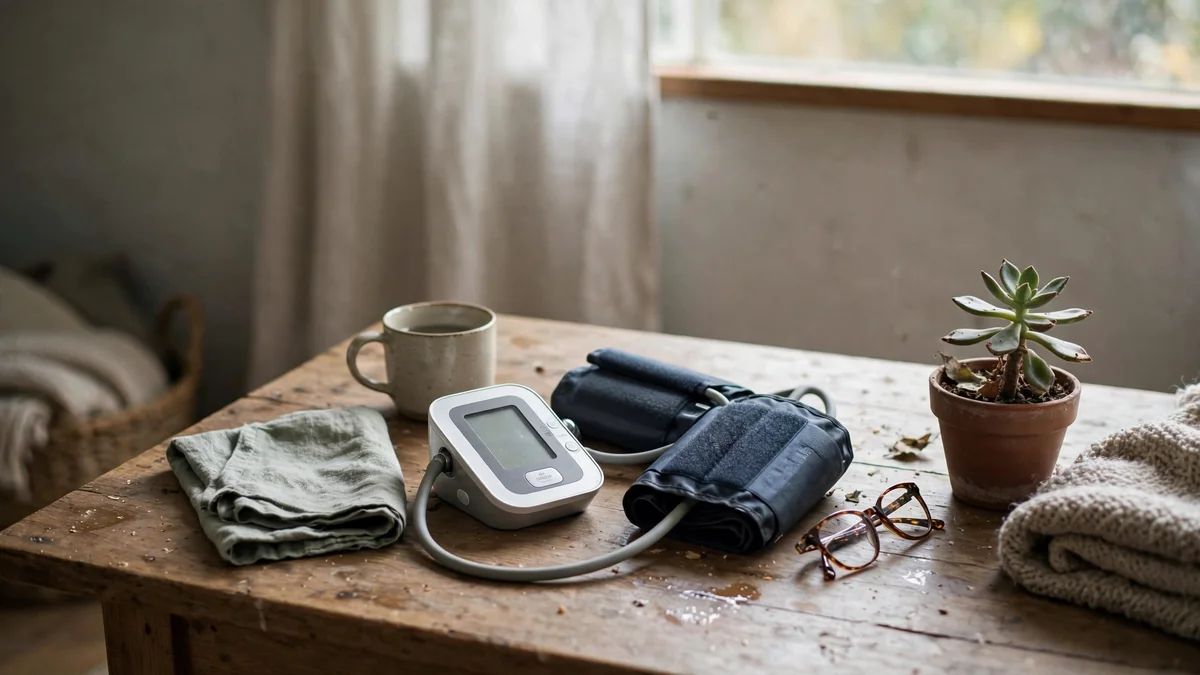
Normal blood pressure is usually written as a pair of numbers, with the upper one under 120 and the lower one under eighty for most healthy adults. The upper number is the pressure in your arteries when the heart squeezes, and the lower number is the pressure between beats, when the heart relaxes and refills. Age shifts the typical range a little, but the reading itself always means the same two things.
Jump to paragraph
What the Two Numbers Actually Measure
The top number, called systolic pressure, is the peak force your blood puts on the artery walls each time the heart contracts. The bottom number, called diastolic pressure, is the resting pressure in the same vessels while the heart fills for the next beat.
Both matter, and they do not always move together. A person can have a normal upper number and a raised lower number, which is more common in younger adults. Someone else can have a high upper number with a perfectly ordinary lower one, which becomes more common after age 50 in the United States and across Europe.
A single reading is a snapshot. Your pressure rises when you climb stairs, argue on the phone, or drink a strong coffee, and it settles again within minutes. That is why a diagnosis never rests on one measurement taken in a hurry.
Why Age Changes the Typical Range
Arteries are elastic when we are young. Over decades, stiffening and plaque buildup reduce that give, so the upper number tends to creep upward while the lower number often flattens or even falls. This is a normal mechanical change that happens over time.
Children and teenagers normally run much lower than adults. By the teenage years, a reading around 110 over 70 is unremarkable. In early adulthood, healthy readings vary; 120 over 80 is a reference point, not a target everyone should reach.
Age affects what is typical, while safety still depends on the individual reading and circumstances. A 70-year-old with a systolic of 150 is not “normal for their age” in the sense of being harmless. Talk to your clinician about your personal target instead of comparing yourself to a neighbour.
The Categories Most Clinicians Use
Most health systems group readings into a small number of bands. The exact cut-offs vary slightly between countries and between professional bodies, so check the label or local guidance where you live.
- Normal: upper number below 120 and lower number below eighty.
- Elevated: upper number in the 120s with a lower number still under eighty.
- Stage 1 hypertension: upper number in the 130s or lower number in the 80s.
- Stage 2 hypertension: upper number at or above 140, or lower number at or above 90.
- Hypertensive crisis: very high readings that need urgent medical attention.
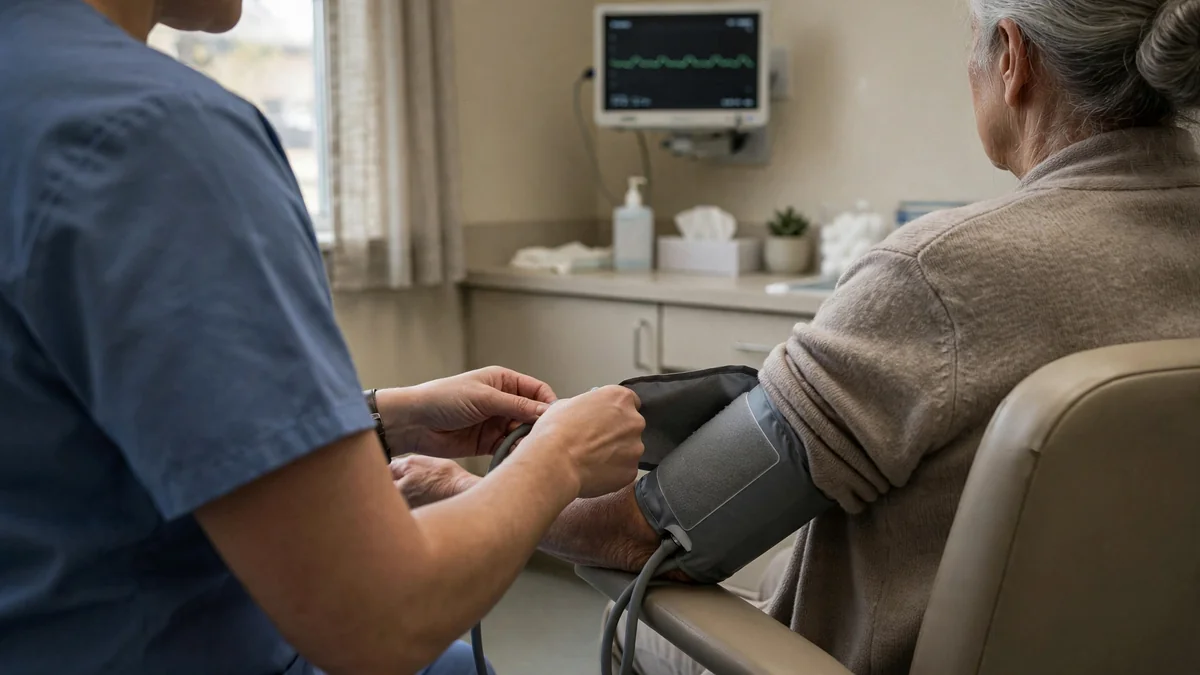
These bands help clinicians make treatment decisions. A doctor looks at the pattern over weeks, your other risk factors, and whether organs such as the heart and kidneys show any strain.
How to Take a Reading That Means Something
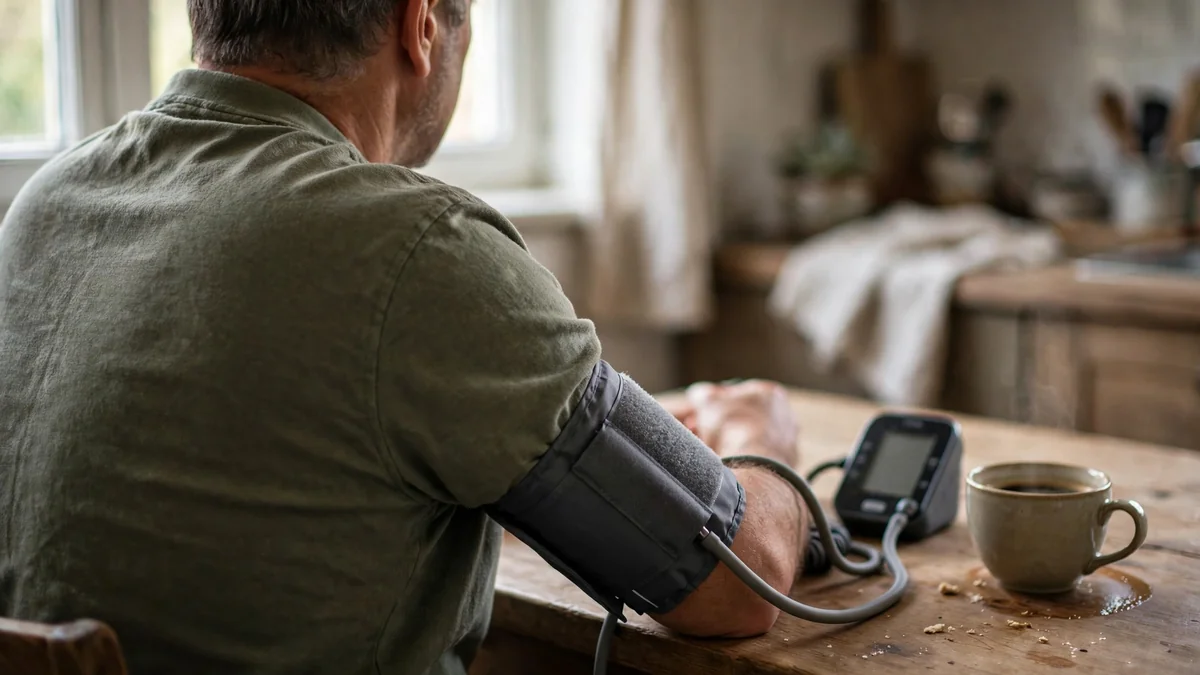
Home monitors can be useful, but technique decides whether the number is worth anything. Follow the same routine every time so the readings can be compared.
- Sit quietly for five minutes before you start, with your back supported and both feet flat on the floor.
- Rest your bare upper arm on a table so the cuff sits level with your heart.
- Wrap the cuff on bare skin, snug but not tight, with the tube running down the inner arm.
- Stay still and silent during the inflation, and do not talk or check your phone.
- Take two readings a minute apart and write both down, along with the date and time.
- Repeat at the same times each day, usually morning and evening, for a week if your clinician asks.
If you use a smartwatch or a phone app to log the results, you can record the results there. Wearables and fitness tracker devices are discussed in these articles.
What Can Push a Reading Up or Down
Many everyday things move the numbers temporarily, and knowing them stops you panicking over a single high result.
- A full bladder can affect the reading.
- Caffeine, nicotine, and alcohol all raise pressure in the short term.
- Talking during the measurement can affect the reading.
- A cuff that is too small for a large arm reads high; one that is too loose reads low.
- Cold rooms, pain, and anxiety all tighten the arteries.
White coat hypertension is the name for readings that are high only in a clinic, and masked hypertension is the opposite, normal in the clinic but high at home. Both are common enough that many clinicians ask for a week of home readings before changing anything.
When to Get Medical Help
Call emergency services if a reading at or above 180 over one hundred twenty comes with chest pain, breathlessness, weakness on one side, trouble speaking, or a sudden severe headache. If there are no symptoms, repeat the measurement promptly. Contact a healthcare professional urgently if the reading remains very high.
Contact a healthcare professional if home readings remain high across several days or if the lower number is repeatedly eighty or above; symptoms such as nosebleeds, blurred vision, or fatigue do not by themselves establish high blood pressure. Do not stop or change any prescribed medicine on your own, because some drugs cause a rebound surge when they are stopped abruptly.
If you are starting a new exercise habit to bring your numbers down, it helps to know what a good gym actually offers, and this roundup of fitness clubs in the USA covers what to look for in a membership.

Lifestyle Levers That Move the Numbers
Nothing here is exotic, and none of it works overnight. The effect comes from stacking small habits over months.
Cutting back on salt is the single most discussed change, and it helps most in people whose pressure is salt-sensitive. Potassium-rich food such as beans, spinach, and bananas helps too, unless your kidneys are impaired and your clinician has told you otherwise. Alcohol reduction, weight loss, and better sleep all show up in the numbers within weeks.
Movement matters more than intensity. Brisk walking, cycling, or swimming for a sustained stretch most days of the week is enough for many people. If you prefer structured exercise, a gym with a proper cardio area makes the habit easier to keep, and mobile health apps can handle the reminders and logging so you can follow the pattern over time.
Normal Blood Pressure FAQ
Is 130 over 80 normal?
It depends on the guidance you follow. Many clinicians treat 130 over 80 as the start of stage 1 hypertension in adults, while others reserve that label for higher figures. Either way, it is a reason to review salt, weight, sleep, and activity without panicking.
Does normal blood pressure change with age?
The typical range drifts upward as arteries stiffen, so an older adult often has a higher upper number than a younger one. That drift is common, but it is not automatically harmless, and your clinician may still want it treated. Age affects what is usual, while safety still depends on the individual reading and circumstances.
Which number matters more?
Both matter, but the upper number becomes the stronger predictor of risk after about age 50, while the lower number carries more weight in younger adults. A high reading in either position deserves attention. Bring your log to your appointment so the pattern is visible.
Can I trust a smartwatch for this?
Most wearables estimate trends; they do not measure pressure directly, and their accuracy varies between devices and users. Use an upper arm cuff for anything you plan to act on. Log the cuff results in whatever app you like. A watch can prompt you to check, but it cannot provide a diagnosis.
How often should I check at home?
If your readings are normal and stable, a few times a month is plenty for most people. If you have been diagnosed with high blood pressure or your clinician is adjusting medication, a short period of daily morning and evening readings gives a much clearer picture. Ask what schedule they want before you start.
Did you like article? Say thanks by clicking below: